Episode Transcript
[00:00:00] Speaker A: Hey, YouTube theologians. Welcome to the Theology Q and A podcast. I'm Pastor Brian Wolfmuller of St. Paul and Jesus Deaf Lutheran Churches, joined by Pastor Andrew Packer of Good Shepherd Lutheran Church, Collinsville, Illinois. Pastor Packer, heard a rumor about you that you had to push your broken rental car 30 miles to the airport last week.
True.
[00:00:17] Speaker B: Well, it was not my. It was not my rental car.
Somebody else's rental car, but we almost had to do that. But we also had Pastor Matt Richard was almost going to heroically have to come in rescue us, but we got there. We made it.
[00:00:30] Speaker A: Would the real AAA please stand up?
[00:00:32] Speaker B: That's right.
[00:00:34] Speaker A: We are live somehow on YouTube, which I don't know exactly what that means, but I think it means people can watch and ask questions. I don't know how I'll actually see their questions. Anyhow, we'll be figuring all that.
[00:00:46] Speaker B: We have it all figured out in the meantime.
[00:00:49] Speaker A: But you got some questions ready for us anyway, so what do you got?
[00:00:54] Speaker B: Okay, your favorite question. Was Luther a Calvinist?
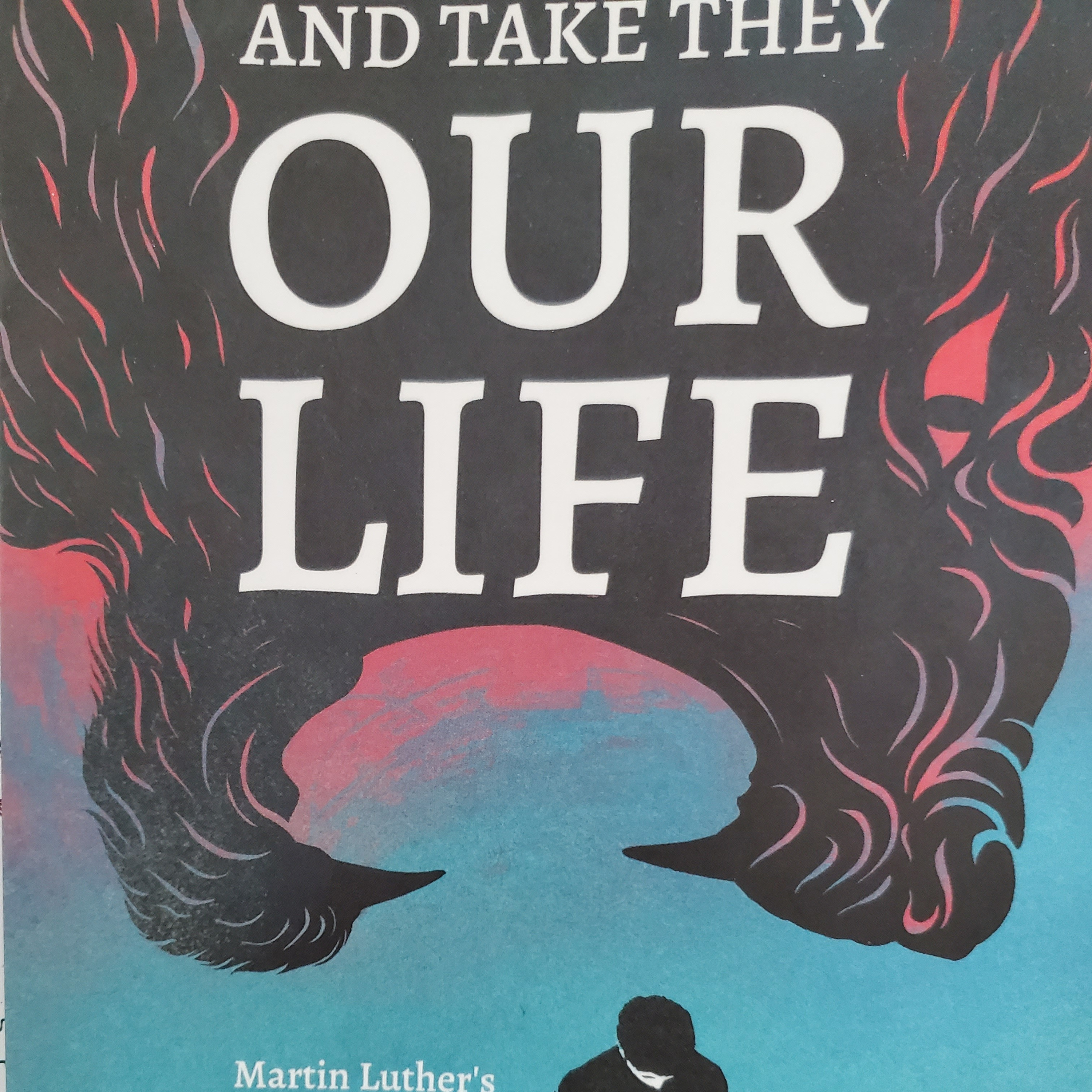
So I am a new Lutheran and I recently finished reading the Bondage of the Will, which in hindsight was probably not the best starting place for Luther outside the Book of Concord. Yeah, I know that Lutheran theology is not identical to Luther's, but he seemed very comfortable, possibly more comfortable than Calvinists. I know, with the idea of God choosing or predestining people for hell.
Is this just something that Lutherans disagree with him on, or am I reading this wrong?
[00:01:24] Speaker A: You, I want to talk about this, but you're really the expert on this. You got ideas?
[00:01:31] Speaker B: Yeah, I, I do. I think Luther comes across that way. I don't think that's ultimately what he's doing there, but I can see how especially we're coming from a Calvinist background. If you read Luther, he's going to sound that way. I actually wrote a whole paper on this in seminary that, that Luther gets rid of some distinctions in there and we don't need to get into all the, the weeds on that, but has surrounding absolute necessity. And by the time you get to Chemnitz, Chemnitz will kind of gently correct Luther and point out that Luther and the Book of Concord point to Luther's later Genesis lectures where Luther's kind of like, yeah, I went a little too far with what I said there. It could be taken to mean double predestination, predestinating people for hell.
And so you need to understand it in light of my, this what I'm saying right here. And so that's what the Book of Concord does, it says they recommend the bondage of the will, basically in light of his Genesis commentary. That little note about that one thing.
And so if you want to know what they believe Luther was teaching and how best to understand bonds of the will, I would read the formula of Concord on election.
Right. Read that. Which I think is the best thing ever written on the topic. We've said that many times. Like, if you want to understand predestination, read the formula of Concord, Article 11 on election. It's just wonderful. It's.
[00:02:53] Speaker A: I don't know how many times that comes up. And I just go and copy and paste the, the epitome. The.
[00:02:59] Speaker B: Yeah, it's just so amazing. So just read that.
[00:03:03] Speaker A: I write about this, that, that the formula quotes the bondage of the will is Article 2 or Article 1 on original sin, but not Article 11 on election. In other words, if you're going to apply it, let's apply it to original sin and this idea of the free will, but let's not then push and apply it to the doctrine of election. That's where things get, they go too far.
[00:03:27] Speaker B: And I think what Luther was doing and this happens. And like I said, Luther seemed to realize this by the time of his Genesis commentary. And Chemnitz realized it while he's writing about Luther's view is that Luther, in an argument, he's trying to crush Erasmus. And so, you know, he says some things and then looking back, he's like, oh, it worked to crush Erasmus, but now these Calvinist guys are taking it and running in a different direction with it than I intended. Right. And so now he has to say, well, it'd be better to say it this way so that people can't run off with it in this direction.
And I think that's where the, that, that, that's, that's what he's doing.
And so if you read out the Calvinist framework, this is why Calvinists love that book. Because if you're reading it with a Calvinist mindset, like, it sounds like what you believe, but then if you read it through the Lutheran lens, you're like, oh, I see what he's doing, and I can see how he could be misunderstood. And so I do not think Luther was a Calvinist, and I do not think Luther held to double predestination.
He just, he's trying to crush one opponent and gives a little too much ammunition to a different one. Not intentionally.
[00:04:35] Speaker A: So as far as I can tell, the, oh, how do I change this here I'm going to try to show you.
[00:04:45] Speaker B: Aha.
[00:04:46] Speaker A: I'm going to try to show you the. This is Luther in small called.
And as far as I can tell, this is the only place where he actually quotes the false teachers. And he's quoting the scholastics that teach on free will. And he says after the fall of Adam, the natural powers of man have remained whole and incorrupted and that man by nature possesses a right understanding and a good will. That's what the philosophers teach. And here's this key distinction that Luther makes between philosophy and theology. So that philosophy always sees man as free.
Theology sees man's will as bound. This is so important for understanding all our theology. Man has a free will. This is rejected. Either to do good and refrain from evil or refrain from good and do evil. That man is able by his natural powers to observe and keep the commandments of God. That's Pelagianism. False doctrine again. That man is able by his natural powers to love God above all things and his neighbors himself. False doctrine. If man does what he can, God will grant him grace. False doctrine. This is all this kind of free will theology that takes the Catholic teaching away from doing theology and toward doing philosophy. And this is what we were talking about this morning in Worldwide Bible class. This is Lutheran Genesis.
And he digs into this that the Catholic doctrine can't understand original sin because they don't even believe that it's guilt. And so they can't see the nature of original sin, which is to take what's good and make it evil and what's evil and make it good. And because original sin is. Takes man, which is evil and makes it good, it then takes God who is good and makes it evil, which is.
Which is really, I mean, kind of amazing.
So, so this is all. This is what Luther's trying to unfold in the doctrine of the bondage of the will.
[00:06:39] Speaker B: So I just saw that you put bound will under yours and found want undermine.
[00:06:44] Speaker A: That's.
[00:06:44] Speaker B: That's amazing.
Yeah, I did. Like I said, I wrote a paper on it. So if anyone wants to read that for the few who would be interested in pursuing that topic.
[00:06:52] Speaker A: I do.
[00:06:53] Speaker B: I. I can send it.
[00:06:54] Speaker A: Is it published?
[00:06:54] Speaker B: Send it to people?
No, it was a, it was a paper I wrote for the. What was it called? Well, it was for a class, but then the Luther Whatever at Seminary seminar.
[00:07:07] Speaker A: Let's get that published on your substack.
Patrick Packer has a substack, by the way. I was reading it this morning. I was reading his substack where he was explaining why he hasn't written on substack.
[00:07:20] Speaker B: And then I thought that was ironic,
[00:07:21] Speaker A: he's going to all these places. And I said, I wonder if some of that is my fault. And then now I'm.
[00:07:25] Speaker B: It probably is. It probably definitely is. Yeah.
All right, Are you ready for the next one? Did anyone jump on with a question?
[00:07:35] Speaker A: There's a lot here you want. Let me see if I can do this show on stream. K asks pastors.
[00:07:41] Speaker B: Look at that.
[00:07:42] Speaker A: Do you.
[00:07:43] Speaker B: Can you see that? Yeah, I can.
[00:07:45] Speaker A: You've got a hold of this getting fast.
Can you speak on Orthodoxy and its underlying mysticism and Buddhism?
Of course. Happy to. Part of it actually has to do with what we were just talking about is the. The view of the will. So that.
Okay, here's my view, my very simplistic view of church history, and that is that you've got theology which says man's will is bound and talks about original sin. Then you got philosophy which says man's will is free. So you got bound will, theology versus free will philosophy. And the result is that.
Whenever the philosophy gets in there, then you just get free will showing up. And that happened early with Orthodoxy.
So they've really never had a full doctrine of original sin. They've understood that man's will is corrupt, is weak, is sick, but is not deserving of God's wrath. And that's led to. Now, like the modern orthodox apologetics are all busy denying the atonement. I mean, it's crazy. Like, this is going to be the greatest argument. It's like here you come to convince me to be Orthodox, which means convincing me to believe that Jesus didn't die for my sins, or at least that he wasn't the penal substitutionary atonement to endure the wrath of God. It's something else. I don't know.
[00:09:08] Speaker B: Can I ask a question about that? Yeah, because I think it's related and then you can expand on it more.
I've heard people put it this way, that Eastern Orthodoxy sees the prime man's primary problem as death, not sin, whereas we see man's pride problem as sin. But that's always baffled me because what is the cause of death?
[00:09:27] Speaker A: Death?
[00:09:28] Speaker B: Like, I just. I don't. I don't get it. So help me and help everyone else understand that move and how it affects those things.
[00:09:36] Speaker A: Okay, let's see how. Let me. Let me simple to complex on this. So the.
That's right. That these two things, in fact these three things cannot be separated from one Another sin, death and the devil, they're bound up in a ball of attack on all that's good, including us.
So that when, for example, Luther can say in the Lord's Supper, talking about the benefit where the forgiveness is, so the Lord sets forgiveness against our sins, where the forgiveness is, there also is life against death and salvation against the devil.
So sin, death and the devil meet. Forgiveness, life and salvation, but it comes through forgiveness. That's how Paul does it in Colossians, chapter one, already beautiful. So he rescued us from the dominion of the devil through the forgiveness of sins, so that our sin makes us truly guilty before God and Jesus. There is now the Lamb of God who takes away the sin of the world, who bears the guilt of the world. And through that forgiveness, through that atoning sacrifice wins forgiveness, which brings life and salvation, so that it's not just the fact that we die, but it's the judgment that waits on the other side of death that is, in fact, fearful for us. And that seems to be mostly missed in Orthodoxy. Now, the.
And I've got this long. I gotta read this. I got a huge document here that someone just gave me which is responding to Javier Perdomo's beautiful article where he talks about all the Orthodox fathers teaching the atonement.
They say this is why it doesn't matter. It's a crazy thing to be arguing against the death of Jesus, but probably it's something like this.
Like, you know, sin hits the different layers of existence in different ways.
So sin hits the material level as corruption, and then it hits the biological level as death, and it hits the.
The animal level as pain, and it hits the human level as suffering and guilt.
Here it hits the animal level probably as wrong, and it hits us as suffering and as guilt. And so.
But the early church fathers talk so much about the corruption of the world, and I think it just is then simplified to say, like, the fact that things are decomposing is the result of the fall, and it's undone in this divine creation unity of the incarnation. So when you're listening to the Orthodox, you're thinking that they've almost got salvation already at the incarnation, before the crucifixion and the resurrection. And I think that's the reason what's going on there.
[00:12:32] Speaker B: Now, what about the mysticism, Buddhism, that was asked in the question.
[00:12:35] Speaker A: Oh, yeah, yeah. Well, okay, so because you deny the original sin, it gives this spiritual good energy which can be connected to God. And so any denial of original sin opens us up either to the optimism of moralism I can by the will do it, or the optimism of mysticism, that I can have this unity with God on the inside. And so Orthodoxy makes that idea of theosis, that unity of God and man as the chief goal, missing seemingly the promise that Peter gives that he is united to us by faith, not by essence or whatever. And so it makes something different of it.
[00:13:24] Speaker B: What about the Buddhism element that was in the question?
[00:13:27] Speaker A: I don't know. So it is this kind of nature of Eastern religion to be mystical.
And so that Eastern Orthodoxy has that kind of intrinsic Christian mysticism. But remember, mysticism shows up everywhere. I mean, there's Muslim mysticism, like the. The whirling dervishes. There's Jewish mysticism, all the Kabbalah stuff. There's Eastern kind of pagan mysticism. Confucianism and Buddhism is that form of mysticism. So they're all kind of.
They're all kind of drinking from the same fountain which Kaberly, remember Adolph Kaeberly in that great book Holiness, the Quest for holiness, talks about the three ladders that man uses to climb up to God. Moralism, the ladder of the will, Mysticism, the ladder of the emotions, the heart, or rationalism, the ladder of the mind. So that we take these three parts of us, the mind and the heart and the gut, and we say, okay, that's what is going to reach out and touch God, rather than understanding the that God is the one who's coming down to us. He's near to us in the word that's preached.
[00:14:33] Speaker B: Do we have any more live ones?
[00:14:35] Speaker A: We have about 40 questions here. All right, so let me see.
Here's one.
Oh, you got show on screen.
Question, Robert Sexton, Did Lutheran theologians believe in natural death of animals before the fall, as Augustine and Basil did? Chemnitz speaks very highly of the oh, where did it go? Of the book by Basel in which he writes about this.
That's a great question for you, Pastor Packer.
[00:15:05] Speaker B: I'll say that's a great question for you because you. I'm not sure.
[00:15:08] Speaker A: I heard a rumor that Luther did talk about the death of animals before the fall into sin, but I have not been able to find it in the Genesis commentary or anywhere else.
And I think, think that this has to be rejected outright, although it leads to this beautiful riddle which is, could Adam and Eve have died?
And part of the question is, well, okay, God had to give them a garden to eat, and the tree of life was in the midst of the garden, would have been necessary for their eternal life.
So it appears Like Adam and Eve were created as contingent beings, that they weren't like some sort of nuclear submarine that just could like perpetually power themselves.
That they needed to receive life from the outside, which is part of our nature as human beings, to receive life from the outside.
So that presumably if Adam and Eve wouldn't have eaten any fruit, then they would have starved to death.
But the problem is they couldn't not eat fruit because God had created a garden for them. In other words, famine was going to be impossible. There was provision so that they could eat all the time. Well, then you say, okay, so the fruit was there for them to eat and live. The fruit of the tree of life was there for them to eat and live.
Could they choose not to eat? And the answer is, well, they had the free will to choose, but they weren't sinful, so they wouldn't choose that.
So, so the answer is that Adam and Eve were going to live forever, but not as perpetual beings like the angels.
They were going to live forever as those who are in a mortal body that have to eat and have to eat this particular fruit to live forever. And the animals have that same nature. So that it's not like.
So that death entering into the world is not.
It's not because like the armadillos were never gonna.
Were some sort of like, I don't know, Teflon creature that had a sort of life source embedded.
People, even all the creatures had to eat stuff and drink to stay alive. That was part of their condition. And yet everything that they needed for life was provided. And that corruption that causes us to grow old and fade, it seems like that was also not.
Was not present there before sin.
So I do not. I think that the first thing to actually die, to stop breathing is the animal that God took to slaughter for Adam to cover Adam and Eve's nakedness, to use that hide that's pulled off of the bot, the muscle of the animal, and wrapped warm around the naked bodies of Adam and Eve.
That that is the first death that comes into creation. My thoughts.
[00:18:10] Speaker B: All right. Sounds like perhaps one place in Luther that people are getting this from is a place on Psalm 90.
I don't have the exact quote, but it sounds like that's where they're often getting it. The other issue is two.
Basically what we, well, most of the church fathers taught about the fall was that it happened so quickly, right? Like within.
Like they weren't even there long enough for anything to die, right? So does it become a. A moot point anyway?
Like, that seems to be.
Seems to be an issue, right? Like if no one was going to die anyway because it wasn't there long enough, so we never got a chance to find out.
So I. I don't. I guess I don't worry too much about it.
And from what I just. I mean, that was a quick research using my robot, but it seemed like
[00:19:06] Speaker A: it's not AI anymore, by the way, it's si. Did you get that?
[00:19:09] Speaker B: Yes, that's right. Oh yeah, yeah. I don't want to be rebuked by Trump like Elon Musk was.
So there's a quote on Psalm 90 that seems. It's so vague though, I can't. I don't think you could take it one way or the other.
And then I don't have any citations directly for Chemnit, so I'd have to look into that more if they actually said it somewhere. But to me it doesn't really matter a whole lot since most church fathers take it as happened so soon that there wasn't really time for death to enter in anyway.
So do we. Are we. There's my cop out.
[00:19:45] Speaker A: Are we on the same page on this or do we disagree on what day the fall happened, do you think? Day seven or eight?
[00:19:53] Speaker B: I don't know if I've worried too much about it.
I think generally I've taken it day. Day seven, but to go day.
[00:20:03] Speaker A: I'm a day seven guy too. But I. I think it's significant that it was on the Sabbath. But in order to disagree with you, I might change my perspective. Here's the point is that it was early on and both of us, I mean the importance of this literal reading of the history of Genesis is there for us. I mean, that is.
We don't want to mess with that.
Why.
[00:20:32] Speaker B: All right, hit us with the next.
[00:20:33] Speaker A: Why does it matter?
Why is this so important, this historicity of Genesis?
[00:20:42] Speaker B: Well, I think that's one of the issues that comes up quite a bit, is whether it's actually telling us a real story or just giving us symbols and mythological type language. But I think it's important that one we understand is history. But it's also history, like all of Scripture, that points us beyond itself to deeper things, like to Christ and the church and to the things that are going to be done in the future. So I think both things are happening.
I think there's a really great book on that. Pierre Light Heart's book, I think it's just called Creator is really good on this stuff, on showing that it's Both history and.
But it's. It's pointing point us beyond just history to other things. So when people see that other kind of stuff, I'm like, yeah, it's there too, but you don't have to deny the history to get there.
[00:21:29] Speaker A: You like that light heart guy.
[00:21:30] Speaker B: You.
[00:21:30] Speaker A: You sent me to read the book. Deep exegesis.
[00:21:33] Speaker B: Yeah, it's really good. I mean, that's.
[00:21:36] Speaker A: It's looking at me here. I've got that creator book too, from him that's looking at me.
[00:21:39] Speaker B: I mean, I'm reading this right now. The Four Senses of Scripture by Patrick Shriner. Great.
[00:21:44] Speaker A: We have to be just on that point. I want to. I want to. I want to make sure we put a pin in it. And that is that.
Like when we, for example, when we're debating against the Baptists about the Lord's Supper, and they say the Lord's Supper is a sign, it's a memorial meal, we say, well, of course it's a memorial meal. It's just not only a memorial meal. So much more than that. Or when they say baptism is a symbol of death and resurrection, we say, well, of course it is, but it's also actually a death and resurrection. It's more than that. It's not less than that. It's more than that. So when someone says that the days of creation is a deeper liturgical unfolding of the reality of the world, we say, well, of course it is. But more than that, it's not just that. So, okay, here we go. Ministerios Emmanuel says, what does a Christian do if his prayers seem to go unanswered? Despite being persistent, nothing seems to change for better in his life.
What say you, Pastor Packer? It's nice because I'm asking the questions now.
[00:22:46] Speaker B: Yeah, we answered this one. It was just a couple weeks ago. One very similar. The person who said that they were praying and it just got worse.
Right. One of my favorite quotes on this is CFW Walther, who says, right. Whenever it seems like God's delaying answer. So God, cancer, prayers, three ways, right? Yes, no and wait. Right? Those are like the three ways God answers prayer. And so if he's telling you to wait, Walter says, the reason God does that is it teaches you to trust Jesus even more. Like, you're constantly going to him, depending on him, looking to him, humbling yourself before him and clinging to him. And so that if you're praying persistently and it hasn't happened yet, then one of the things you can learn is that God wants you to just keep depending on him. I always use example of St. Augustine's mother Monica. Right. St. Monica prayed for 30 plus years that Augustine would be saved before she got answer to her prayer. Right. And then becomes like one of the greatest theologians to ever walk the earth. So I mean, 30 years is a long time to pray for something.
Like I feel like I've been praying for something for a few years that I've gotten an answer on and that seems like a long time. But she's doing it 10 times as long as I've been praying for this thing. So yeah, keep praying because the Lord's using it for your good.
I mean, that's what Walter says. And I think it's a great way to approach it.
[00:24:06] Speaker A: I think this is. So every prayer starts as an unanswered prayer, right. Otherwise we wouldn't be praying for it.
[00:24:16] Speaker B: Right.
[00:24:18] Speaker A: But then it remains, this is Luther's teaching too. I mean, just biblical teaching. It remains unanswered as long as it's good for us to.
For it to be unanswered.
So if we're waiting for God to answer our prayers, it's for our own good that we're waiting.
So this is our trust. And it's also good for us to remember that Jesus tells all these parables so that we don't grow weary in prayer, so that our praying does not follow good manners knocking on the neighbor's door.
And in this way, the ask, seek and knock becomes not just three of the same things, but different.
It's the asking is the first petition.
And then when it's not answered, when we're still waiting, then we seek the Scriptures to see if we're asking for the right thing.
Is this what God wants to give or not?
And then being convinced that in fact this is a prayer that is in accord with the will of God and his desire to serve us as our good heavenly Father. Then we just keep on knocking. And it's that knocking that is the hard part. Because we think, man, you know, how many times have I prayed for this? But Jesus says, keep on doing it. Don't grow weary in prayer.
[00:25:41] Speaker B: I have to get the related question, what do you do?
Like, if you don't know if it's a no, right, or a wait?
And my usual answer is, well, if it's not clear that it's a no, then you keep knocking, you keep praying.
Eventually it'll be clear, right? For some things, like you'll get a very clear answer, the answer was no. And then you have to, you have to humble yourself and believe that that was the best thing for you to receive. That was the best answer for you.
Even if that's not the answer you had hoped for.
But if it's not clear, then it's still a. Still a wait. So just keep praying.
[00:26:17] Speaker A: Here's another one, this personal one. What do you both wish you did prior to attending seminary and also while you were at seminary currently applying Would appreciate wisdom on how to make the most of the time. I have great question. Prepping for seminary and at seminary. What did we miss out on?
Congratulations, by the way, William, on your applying for seminary. And that's great.
[00:26:39] Speaker B: Yeah, that. I mean, I guess there's some things I did do that were helpful that I know maybe that might be useful. Like I always tell guys, if you haven't had any Greek, getting ahead, at least on Greek vocab is really helpful because a lot of guys. I was a Greek tutorial after the summer class for the fall Greek class. And one thing that slams guys a lot is all the new vocab that gets added to you, like right away. Like, you're just constantly adding vocab and guys kind of can drown in that with all the grammar and other things. So I usually recommend Greek at least a vocab. It's even better if you've had more than that. But at least the vocab, I would say too, having read through the entire Bible and confessions before you go, the number of guys who get to seminary who haven't read through the Bible or confessions is, I think, too high. Like we should. Like that should be something you should have at least done before getting there so you're familiar with those things and, you know, hopefully multiple times before you get there, but at least the very least once.
I'm trying to think of things beforehand.
One thing I wish I would have done and I think all guys should. Should do, I was. It was told to me in college. I had this.
I was at Christian Missionary Alliance College. I had this couple from my Baptist church came to me and took me out for breakfast. And they're like, you know, you're looking at. At the time, I was looking at going to youth ministry or whatever. But they're like, you should, you know, get some practical skills so that if you're ever in between stuff or you need to fall back on something, you have some practical skills. And I was like, oh, that sounds great. And then I didn't do anything with it. That's one thing I wish I would have done.
I mean, I got a lot of different job experience because the way my life unfolded. But if I had had some like, actual skills like they said, it would have made that in between time better. Or if you get sent out and you end up having to work on the side. I think a lot of guys work on the side. So learning some kind of skill or something that you can fall back on just in case, it's probably the number one thing I didn't do that I wish I would have done.
[00:28:42] Speaker A: Yeah. I made jewelry, by the way, for. For all through college, for a couple years before I went to seminary. And then at seminary did a stone inlay and stuff like that in the basement. That was great. Until I had to stop because I couldn't get enough hours in that way. So I started. I was looking for a job at a bakery and I ended up finding a job. Well, I was actually looking at. For a job doing jewelry repair and then I couldn't find anything. So I was looking at a job at a bakery and I thought I'd get up early and like make bread and then go to school, but I couldn't find that. Ended up waiting tables at Don Hall's guest house, which was. I actually think there should be a requirement for every pastor is he's got to work for a year as a server at a restaurant. That's what Jesus says, right? Who's greater? The one that sits at the table or the one who serves? So you got to learn about service that way.
I would say not only that familiarity, deep familiarity with the scriptures so that someone can just, you know, open the Bible and you're. You've got the big picture, the timeline, the major names, the major themes. You've got that under control.
Familiarity with the Book of Concord. So having read it and got the big picture of the book of Book of Concord, then I would also that I think the three major texts that are touched on at the seminary but just ought to be seminary, but they're not.
We have to be familiar with these three texts.
And it's Luther's greater Galatians commentary that's just a primary source document that we need to know a lot better. Chemnitz's examination of the Council of Trent, especially the first two volumes, is absolutely necessary. You can read the summaries that we're publishing, but if you're going to seminary, you ought to get the real dealio. And then Luther's Genesis commentary, also this foundational text that we. It just, just ought to be. We ought to be very familiar with it. And so those are the three things that I would.
I would want to know really well. In fact, if I was just designing a seminary, I would just say get a book of Concord, a Bible in Hebrew and Greek, get a book of Concord and get Luther on Genesis and Galatians and Chemnitz on Trent, and you're going to be actually probably fine. Like, those are our prime texts. So we, and we should know them really well. We should be familiar with them. So it's great.
[00:31:02] Speaker B: I also wish I had a better.
I had some classes on philosophy before going to seminary, but I wish I would have had better classes on philosophy. I still feel like I could do way better in that than I am. The other thing is my. The Presbyterian Seminary I went to, they had a.
They had books you had to read before coming in and some like, prerequisites you had to do before you came in. And one of them was that Morton and Adler book on how to read a book.
And now there's a reform guide that's written like a newer version of that specifically for Christians. But either of those books, I think would be really helpful. If you haven't done a lot of study or a deep reading and having to study, learning to skim, read deeply, et cetera, all of those things, those books can be really invaluable for someone if they've not.
They haven't done a lot of that. And depending on the backgrounds, people now if they went to a good college, they've hopefully been already been taught that. But depending on nowadays, who knows? So if you're not familiar with those, or how to read, or how to read well, how to do all those various things, I would definitely, definitely learn how to do that. You're gonna do a lot of reading.
[00:32:06] Speaker A: Here's the philosophy book that Dr. Schultz recommends. This textbook, the Great Conversation. And that's a. So that's just a textbook that'll kind of get you your introductory to philosophy. So that's really good. And it'd be really good to have that. Of history, like to have the broad outlines of history, what was going on when. So that you can put things in context. Because so much of the, so much of understanding, comprehending and being able to think clearly is being able to put things in their context. And so, so that's. That's super important. So, ooh, here's one. As someone exploring Lutheranism simply Sunshine asks, it's cool.
When is it time to progress to adult catechism class? Is it designed to answer questions before deciding, or should this be done through an appointment with a pastor. Answer.
Jump into class as soon as you can. So adult catechism class. Every church will do it different, but adult catechism class is designed to march through the six chief parts of the small catechism. Ten Commandments, Creed, Lord's Prayer, Baptism, Confession, absolution, and the Lord's Supper. And then more so that it provides those basics and it kind of gives you what you need to start asking the right questions.
So I would jump into that class as soon as possible. It's not like you're required after you go through catechism to join, like you're somehow in some sort of spiritual contract or something.
The way we do it is we try to have a meeting with people at the beginning when they jump into class. Hey, what's going on? What's background? And then when the class is coming to an end, what are the questions that you still have? What are you still working on? And I went through adult confirmation twice, which was great. And I've taken people through it three, four times. Or people will go through class and then they just need to ruminate it on a little bit, and then they decide, you know, that's. That's not for me. Or it is. So. But. So I say jump in right away. What say you?
[00:33:54] Speaker B: I would have them jump in right away and even bring. If you have questions, don't be afraid to ask them in the class, because I think you get a large, you know, you get a group of adults together who don't really know each other, and people sometimes are a little timid to ask questions, or at least some people are like, there's, you know, there's going to be different personalities.
I would ask your questions in class, too. We usually want you to ask questions, and you're probably thinking of a question that someone else also has, but maybe it's too embarrassed or shy to ask. So if you've got good questions, just. Just ask them.
Your pastor would be delighted to answer questions in class as well as outside of class if you have further questions. But don't be afraid to ask them in there.
We usually have classes going on all the time. We're starting another one this Sunday, and we love it when people ask questions. And, and then if you have more questions, make an appointment with us. We're always happy to answer questions. So, yeah, jumping in and getting familiar with stuff is, Is. Is really helpful.
[00:34:49] Speaker A: Every Christian should just have a list of questions that you want to ask your pastor. Just running list. And then, you know, when you fill a page you get 10 or 20, say, hey, can I take you out for a cup of coffee? I got some questions that's just. It's really great. So here's another. I don't know how many questions we got, but might as well keep going.
[00:35:08] Speaker B: Feces,
[00:35:14] Speaker A: Well done.
Just got trolled. How about that?
Well, look at. I think it's a good question. Southern Baptist struggle with it.
How come you're not asking the questions? Pastor? Pastor. Oh, where did it go? Oh, boy.
[00:35:28] Speaker B: All right.
[00:35:28] Speaker A: What did feces ask? Where did I go to find.
[00:35:31] Speaker B: Oh, yeah, here.
[00:35:32] Speaker A: Feces asks.
Southern Baptist struggling with memorialist view of the Eucharist. I definitely think Lutheran view of prep predestination and Jesus died for all is definitely correct. Baptism unconvinced resources to study you.
There's a couple of. I mean, of course, the resource for.
For understanding our Lutheran doctrine would be the Book of Concord on this distinction between Southern Baptists and Lutherans or Evangelicals and Lutherans. That's what I was really exploring in the book. Has American Christianity failed? So I try to walk through the first 12 articles of the Augsburg Confession without saying that's what's happening, to show that, like, here's where it's the same and here's where it's different. Here's where our doctrine of God is the same and different. Original sin is the same and different.
The work of Christ is the same and different. Justification is the same and different, especially with the Lord's Supper.
And that is hopefully then helpful.
It comes down to, though, remember, it's not like, hey, should I be Southern Baptist or should I be Lutheran? The question is, how do I receive the gifts of Jesus?
And what does Jesus want to give? And apparently when he institutes the Supper, he wants to give us his body and his blood for us to eat and drink for the forgiveness of sins. At least that's what he says. So that's what I want to receive when it comes to baptism. He wants to cause me to be born from above through the washing of the water and the Spirit. He cleanses his church with the washing of the water and the blood. Baptism delivers a good conscience. I mean, he wants me to have these things in baptism, too. So what church confesses those gifts that Jesus wants to give? That's where I want to be. So I think that's the way to think through these questions.
[00:37:24] Speaker B: I usually send people. Well, a number of people have read your book Has American Christianity failed? But in addition to that, Kelly Klages, the pastor's wife from Canada, she has a baptism Q and A that's very helpful. It's a PDF that I often send to people and then I mentioned him earlier, but I'll mention him again even though he's not actually Lutheran. Peter Leichart's little book on baptism seems to be really helpful for people who are coming out of those backgrounds to understand baptism from kind of a bigger picture. And he go, he uses Luther's Flood Prayer as the outline of his book. And it's that little series that I think St. Pile was in charge of through Lexham, through Lexam, those little, those little books. So that little book on baptism is by Light Hearts and he uses Luther's Flood Prayer as the outline of the book.
So overall it's very helpful. And I've found people who, coming from a reformed background, that book seems to work well with them and it's very helpful. So those are, those are two or three things that in addition to. We obviously have answered like tons of questions on baptisms. If you just search baptism, you could probably find the question that you're wrestling with about baptism somewhere on the channel that's been answered or talked about.
[00:38:41] Speaker A: Here's a few times Keith lcms one asks. A husband is Lutheran, wife comes from a non denominational church. They have a 10 year old son who's not been baptized. The wife insists on her son being baptized by immersion.
Just, I think just do it by immersion. That's fine. It's still a baptism. So I think we can, I mean the necessity of it wouldn't mean that in some ways like we as a church wouldn't, wouldn't do that. But if the family says hey, we'd like to do baptism by immersion, then okay, it's fine. In fact, I was thinking about how to handle those questions. Like if someone says hey, I'd like to have a baptism by immersion and if we say oh, that's fine, is it fine? How do we do it?
I just, I don't know exactly how to manage that question in an orderly way. But you know, we do what we can and we rejoice that the Lord has made baptism almost like a fail safe. That the efficacy of baptism is just, is not bound up to our doctrine of baptism or our practice of baptism.
It's bound up to our confession of Father, Son and Holy Spirit.
And that's, there's a lot of comfort in that for us.
[00:39:54] Speaker B: And it was Luther's preferred method too. Which is funny. Like it never like stuck in Lutheran churches, but he liked, I mean because so in The Bible, you have two images of baptism. You have being born from above, right? Being born again from above. So you have that pouring imagery, and then you have the imagery of death and resurrection. So you have two images for baptism that are running throughout the Bible.
And the different modes of baptism kind of correspond to those. And in the catechism, Luther emphasizes the death, death and resurrection. And so he. He liked that.
So it's very Lutheran, actually.
We just don't require it because we also see the other images being just as valid and good. So
[00:40:40] Speaker A: here's another one.
Oh, where'd it go? There it is. Adult children, estrangement from their parents, dishonoring or sinful towards parents, even if the adult children may be convicted of the estrangement.
You got it. So part of it depends on. Okay, I think the answer is going to be yes. Okay, big picture.
We are commanded to love our neighbor. And that command to love our neighbor comes directly to us as children in the fourth commandment on your father and mother, which means we love and cherish and serve and obey.
Now, all the commandments are bound. That commandment to love is. Is what gives energy to the commandment. But that love is shaped in different ways. So there's a certain shape of love, parent to child and child to parent.
And the shape of the love, child to parent, is honor.
And the shape of the love, parent to child, is probably cherish, care for, etcetera, Maybe discipline, etcetera.
So that there's a certain shape. Now that love is also shaped not only by the needs of the children, but also in a lot of ways, by the character of the parents and the character of the children.
And so it is possible that there are really bad children and really bad parents.
And that means that our love, for example, if we have horrible parents, our love for them looks different than if we had good parents.
Our love for the children looks different if they're really bad or if there's particular sin. In other words, the sin that is ruling in life sometimes gives shape to our love. So there are situations where a distance is needed so that harm is not done to grandchildren, to whatever, whatever, whatever.
And that does not take away the obligation to love, but it means that love in certain circumstances is going to look like not love.
So the question is, is estrangement ever an act of love?
And I would say no, just the kind of definition of it. Now, is there times where there needs to be distance or times of silence or times of separation, or maybe even like a restraining order?
Can those all fall under the rubric of loving the neighbor? I think so.
But there always has to be.
There always has to be. I think that the obligation of Christian love means that even if we put in safety mechanisms to keep a safe distance, if things are totally out of whack, there's got to be a door of reconciliation, always open.
Even if it's a small door that has a lot of requirements.
I think that we are never committed, we're never permitted or authorized by the command of love to totally cut someone off.
So it could be that there's a lot of things that need to happen before the communication starts up again, and that that communication is even at a great distance, writing or communicating through a mediator or something like that. But I think that the door. We never want to totally cut someone off because we believe that the Lord works repentance and that while a person can reach a place where their heart is so hardened that they've. That they can't believe or can't change or can't love or whatever, we never know it. We don't have access to that.
And so.
And so that's.
So that we. I think that's the condition of being under the command to honor father and mother and the command to love.
[00:44:49] Speaker B: It seems like one of the things happening today is that there's a lot of kids who are cutting off their parents just because culturally. Right. Like anybody that makes your life any difficult in any way, you cut them off.
Right. They're so called toxic or whatever, so you cut them off. And so I see a lot of.
A lot more parents being cut off by their children. Sometimes they'll be even just like political views or whatever. Like, I can't be around you. I can't have anything to do with you because it's stressful, because you hold to these positions or whatever. And that's that. It's just awful on so many levels. I've seen so many parents wrestle with that.
Their kids just want nothing to do with them. And it's. It's not. It's not even like they're a terrible parent. You know, it's not like they're abusive or horrific in any way. They just. They have differing views than their children and their children. Like, I can't handle that. And they cut them off.
And I just think about one of the worst things you can do to a parent, especially someone who's, you know, been striving to be a decent parent, and you just happen to disagree with them or you bump heads with them or their personalities are slightly different than yours or whatever.
And you've caved to the culture of like, you can't have anyone in your life who causes any kind of stress or anxiety, so you gotta cut them all out. It's just, it's just awful. And I feel for those parents. It's just terrible.
[00:46:04] Speaker A: There's a phenomenon. So Al Mohler was talking about that this morning on the briefing, that when you try to, when you get rid of God's rules, you do not end up with less rules, you end up with more rules.
And so that like Psalm 2, progressive ideology of removing the Lord's constraints does not mean that now we're free of constraints. It means that we in fact have more and more and more constraints. And so there's no more legalist, legalisty legalist than an atheist. I mean, and especially if they've got any power, then it's rules and rules and rules and rules and rules.
And this, this is kind of showing itself now in this progressive movement that anybody who threatens your mental health or peace of mind or whatever because they voted Republican or said something about abortion then has to be totally cut off. It's, it's the, it's a worse form of close communion than you could ever imagine. I mean, it's, it's, it's like, it's, it's, it's like, it's the cancel culture kind of thing. And I, I have to do everything. I, I am in charge of, protect, of keeping myself safe. Ay yai yai. It's terrible.
So anyway, so that's what we're dealing with. You get a, you get a, an anti legalistic, pure legalism. Whoa. There's no room for grace, there's no room for mercy, there's no room for repentance, there's no room for, for kindness, et cetera. So.
All right. Want one more? Why not? We got like 50. Here's one.
Sgmystic says, I've been reading our confessions. I'm more open to a more inclusive definition of sacrament with important distinctions. While the number is important. How do you see holy matrimony, for example?
Good question. Here's the. The Bible does not answer the question how many sacraments there are. In fact, the word sacrament is just the Latin word sacramentum that translates the Greek word mystery.
And so there's these things that the Lord has instituted that are wonderful and more than they appear.
And so we call them the sacraments.
So it all depends on how do you define it. How do you define a sacrament and Luther Loved this definition of Augustine. When the Word meets the element fit sacramentum, you got the sacrament. He.
Luther loves that quote from Augustine so much that he talks about it over and over. Like he doesn't like Augustine never said anything better. This is the most brilliant. I'm like, I always wondered why Luther thought so much of it, but the more I think about that, the more I'm captivated, as it's not only just a definition of sacrament, but of reality.
So the Word and the thing, and this is really how we understand all of the cosmos. But anyway, it's how we understand the Incarnation. It's how we understand humanity.
It's at least how we understand the sacrament. And we would say that the Word that joins to the thing is the word of the promise of forgiveness.
So if you want to find the sacraments, what you do is you say, where has Jesus placed forgiveness? And you see it there in the water.
Be baptized and have your sins washed away. You got one, you see it in the blood. This is the cup of the New Testament.
This blood is the New Testament. This cup is the New Testament in my blood poured out for you for the forgiveness of sins.
You got it in the, in the mouth of the preacher. Whoever sins, you forgive or forgiven.
And so you got two and a half sacraments.
Marriage is certainly something instituted by God and commanded him by him, but it doesn't belong to the estate of the church, but rather to the estate of the family.
And it doesn't bring the promise of the forgiveness of sins.
So we would say that marriage is, it's not a sacrament, but that doesn't diminish it.
It's something else. It stands on its own. It has its own propriety in God's ordering of the world.
[00:50:11] Speaker B: What do you think about Ristow in his book on fasting, which I think is a really fantastic book? He, he, he calls fasting sacrament, toll, like things that kind of lead you to the sacrament. So fasting, when done right, is like preparation for receiving the feast, right? So it's, it's connecting you. It's, it's leading you to the sacraments. And so I don't know if it's helpful to call some things like marriage. Sacramento 1. You need a lot of forgiveness, but it also points to, points to the image of Christ in his church, which is why they, they do that.
It's interesting because Melanchthon says, right in the Apology, he lists things like, if we're going to call anything a sacrament, what about prayer? Right? He mentions prayer.
He Also mentions ordination as a possibility.
I think he even mentions, Right. The giving of alms. Like, he throws out several things that.
Because he's kind of going against some of Rome's, what they call sacraments and saying, what about all these things? We could, if you want to start counting things, we could count a bunch of other things that are really good to do, like prayer, giving money to the poor, ordination.
But we've never called them sacraments. But I think there is a place we're calling some things sacramental when rightly understood. Like you could, like they're pointing you to the sacraments or to deeper mysteries while not themselves being sacraments. So the book about fasting was. I think it's called, it's by Risdow R I S T A U.
So I don't remember what it's called, though.
[00:51:45] Speaker A: I think so. I mean, I guess if you like, if you make up a word like sacramental, and then you can make a definition and then you can be like, okay, these things are.
But here's.
[00:51:56] Speaker B: Isn't that what we do with the word sacraments? Yeah, so, because, I mean, so how we define it is going to limit. Right. It limits exactly what it is. You know what I mean?
[00:52:04] Speaker A: So, so it's important for us to say, I mean, so the question, like the number of the sacraments is a. Is a theological question that comes up in, in the Augsburg Confession. What's the number of the sacraments? And they're like, it depends.
Like, yeah, it's not the important question. And the danger of the question is that each of these gifts of God loses its uniqueness. Right.
So we sort of, we reduce baptism and the Lord's Supper into like one thing, but they're very different. I mean, baptism, for example, is once the Supper is do this often, you know, alms has its own place.
Prayer has its own place and promises and gifts, marriage has its own place, fasting has its own place. And these are all tremendous gifts of God.
And so do you know the helpful thing about the language of sacrament is that it helps fight this kind of gnosticism. This was one of the questions from earlier, like this evangelical distinction of if it's outside, it's a work and if it's inside, it's spiritual. That's not the case.
It has to be outside and spiritual for us to have the assurance of salvation. And so our doctrine of the sacraments, which is that God works through means, baptism and the supper and these external things to bless us spiritually.
So important. But then beyond that we want to let baptism be baptism and. And marriage be marriage, etc.
When you fast, Harold Ristow. There it is.
[00:53:33] Speaker B: Yeah, I was gonna say when you fast, but I can remember if that was a different book and I didn't want to mess it up so. So I just gave his name. But yes, that's correct. It's a great book.
[00:53:41] Speaker A: Someone says Spike Fast Racing says. So Super Chat. Don't get. I do not know.
I do not know how to see something as a Super Chat. I'm sorry. Super Spike Fast.
I'm happy to. I don't even know what a Super Chat is actually.
Do you just put super at the beginning of your question and I'll. We obviously don't know what we're doing. I should probably.
[00:54:06] Speaker B: We're super chads.
[00:54:07] Speaker A: Maybe someone else is asking. It says a super. They don't know spy. I'm finding that out too. How do I find. Ah, brother, now I'm getting in trouble. Try to do a public service here.
Let's see.
It just says public chat. I bet there's a different interface here on our little Riverside versus our.
[00:54:31] Speaker B: There could be.
I saw a question about an American man is asking.
I love usernames.
Do you want me to just read it? I don't know how to. I don't know if I can put on the screen since I'm not. Try it.
[00:54:45] Speaker A: If you pr. If you hover over it and it says show on the stream.
[00:54:49] Speaker B: Yeah. I'm not. I'm not special. No, because I'm not. I'm not the one. I'm not the one in charge. Okay.
I hear mixed info about recommendation for pastoral roles. I'm 28 and I love theology and teaching about it and helping others in spiritual need. I've heard we need more solid young male congregants. So I shouldn't. And I'm willing to sacrifice my ambitions for the church in that way.
But I want to get your insights. So should. Should all young men who are interested in theology look at pastoral rules or is it good for them to stay in their local church?
[00:55:20] Speaker A: No. Great. Great question.
What do you think?
[00:55:26] Speaker B: No, I think it depends that people
[00:55:29] Speaker A: are sitting here sending us money somehow to answer the questions. Don't send us money. We're fine. Let us know if you need something.
[00:55:36] Speaker B: I'll take it. No, I'm just kidding.
[00:55:39] Speaker A: How do you send the Super Chat to Pastor? We got to do it on your channel, I guess.
[00:55:43] Speaker B: I don't. I don't really have a channel.
[00:55:44] Speaker A: This is how I am about all this online stuff. Sheesh. All right, sorry. So to the, so to the guy
[00:55:51] Speaker B: who, to the question is theological line wants to be a pastor, I think if you have, for example, pastors who say, hey, it looks like you'd be good as a pastor, I think you should go to seminary. I think it's one thing, just because someone's a young man who's interested in theology doesn't mean they're fit to be a pastor. Right? Or even should be a pastor. And we do need men who are interested in those things who aren't going to make good pastors.
And it doesn't necessarily mean they're bad people. They just may not be the right fit for pastoral office or whatever. So it doesn't mean they have to go be a pastor just because they like theology or interested in those things. However, if you're really into theology, and I think they mentioned also teaching theology and they're being trusted to teach it, and it seems like they're doing well with those things. And the pastor's like, yeah, it seems like you have have these giftings. I think you should go, then you should go. I don't think you have to.
It seems like we're almost overcorrecting now. Where before we used to be like, hey, you're interested in theology, you should just go to seminary. Which was not right. And now it seems like we're overcorrecting. Like, hey, you're interested in theology, you have to stay like, it seems like, seems like an over correction just to maybe some flaws we had. So, yeah, your pastor would be the best person to ask because they know you. We don't know you, but you can see if you're interested to see if your pastor what they think, or if your pastor says, yeah, I think you should look into this, then definitely look into it at the very least and seriously consider it.
But I don't think every guy who's interested in theology or reading theology or discussing theology should automatically think, then that means I have to be a pastor, right?
We do need.
I mean, Melanchthon wasn't a pastor, so, you know, we've got a history of that. We did sound laity. But also it may mean you definitely should be a pastor. So get advice and then proceed.
[00:57:45] Speaker A: It's good. So here, thinking about the office, here's I think, a few things. Number one, it's good to want it.
The scriptures say whoever desires the office of bishop desires a good thing. So that desire to be a teacher in the church to commit to studying the Scriptures and teaching it. That is a good thing. The second thing to remember is that you cannot get it. No one grasps the office for himself. It has to be given.
So what you're doing is preparing yourself to.
You are preparing yourself to be fit for a call, and that is through theological study and through personal preparation with those requirements that are given in the Scriptures. So that you do not have the free will to choose to become a pastor. You do have the free will to choose to become a theologian and. Well, every Christian's a theologian, but a theologian and a man who's able to teach and fit for the office. And then you make yourself available to the church and to see if the call will come. So there's a lot of discernment there. And it's tricky when you start, when you dive into yourself to figure out if you can do it or not. That's.
That's a dark forest with twisting paths and you might never come out. So what Pastor Packer said is super helpful to rely on friends and.
And people outside, etc. So I got my YouTube live stream open. So I'm trying to figure out what the. Here's one. Can you touch upon the Lestadian Lutherans? How are they different from traditional confessional Lutherans? We can't answer super chats that we don't know the answer to.
Do you know about the Lystadians?
[00:59:19] Speaker B: No. I can.
[00:59:20] Speaker A: They're connected to the Apostolic Lutherans. Actually, it comes out. I think it's this Finnish sort of thing. And I know a little bit about the Apostolic Lutherans and this, this kind of. It's a unique history there. So I. At some point about a year ago, I was digging into this and figuring out. Figuring it out a little bit.
I didn't sort it out in the Lestadian. Here's what I know now in the Lestadian tradition and in the Apostolic Lutheran tradition, which is those are related to one another. Maybe one's a branch off the other.
When you start talking about baptism and you start talking about the Lord's Supper, things get pretty tense.
And so they are a like, I mean, a very kind of. It's a pietistic tradition, but it's grown up in such a way that it is nervous about the Lutheran doctrine of, well, the sacraments, baptism, Lord's Supper, the absolution. This is from my own kind of digging into the thing. So that's where.
Those are just my thoughts from my memory and digging into it. Did you find something There.
[01:00:32] Speaker B: And basically what you just said, it comes from the 19th century Revivalistic Pietistic movement.
They do personal absolution. Believers confess sins to one another and pronounce forgiveness in Jesus. Name and blood.
Discipline Christian life.
They are not one unified denomination.
So that's what makes it tough.
But yes, revivalistic pietistic was the summary I found. So sounds like you were correct here.
[01:01:03] Speaker A: I just found a button to isolate the super chats here.
[01:01:09] Speaker B: Huh.
[01:01:11] Speaker A: I can't get it onto the thing.
So. Okay. So no more questions. We're just going to do this because we got to stop doing it. But let's hit the super chat so we don't get. I don't know. We're gonna get in trouble. I feel.
[01:01:23] Speaker B: Feeling guilty.
[01:01:25] Speaker A: I don't know if guilt is the right word.
Candice.
[01:01:28] Speaker B: Intimidated.
[01:01:29] Speaker A: Is it spirit?
It's like throwing money.
I don't know.
We're in debt to the super Chatters. I gotta turn off the super chat. I don't want you guys to.
Is it spiritually harmful to participate in communion with non nom family members who do it at home as a symbolic ritual with crackers and juice? And it's not even consecrated by an ordained pastor.
Yes.
[01:01:56] Speaker B: Also not the Lord's Supper. It doesn't sound like. So that's
[01:02:03] Speaker A: bless your family for thinking that they should do this thing that the Lord said do often. But whatever that they're doing is not what Jesus has instituted.
So it's. And what Jesus has instituted is the eating of his body and his drinking of his blood. It doesn't.
There ought to be a pastor there. We don't permit a man to preach or teach or administer the sacraments if he's not properly called. And there's reasons for that. But the man being there and the proper call being there are not what makes the salad, not what makes the supper the sacrament salad. It's not what makes it valid.
[01:02:40] Speaker B: We're getting hungry.
[01:02:42] Speaker A: So.
But what makes it a valid supper is that the body and blood is confessed.
And so in that context of denying the body and blood, that's what you're getting is a denial of the body and blood. And it's a memorial meal. But it has a certain danger to it. Now it doesn't have the danger of unworthy communion.
You're not necessarily sinning against the body and blood except by confession.
The body's not there. It's a cracker.
So you're getting a memorial meal. But that memorial meal is not what Jesus is giving. So closed communion goes Both ways, right?
We say, hey, we have to agree on the doctrine before we commune together. That includes inviting people, but it also includes when we go to visit. So we don't commune at the altars that confess a different thing.
What is your opinion of pop gospel songs?
[01:03:44] Speaker B: What is your opinion. What do you mean? Pop gospels? They mean, like, stuff on the radio. Is that what they're talking about?
[01:03:49] Speaker A: I guess so.
I think this. Maybe let's take Christian music outside of divine service. Divine service.
So not. Not the contemporary songs that want to make their way before the altar, but the Christian songs that are just on the radio. K Love or K Hope or K Face or whatever or what are all.
[01:04:09] Speaker B: I mean, I think some of it's fine. There's some decent songs out there. There's some pretty good songs. There's some songs that are actually quite good. Sometimes I think they.
I hear some songs, I'm like, I don't know if they know what they're saying. Like, sometimes I heard a song about baptism or something. I'll be like, wow, that was actually really good. I don't know if they fully understand what they're saying, but that was great.
And, you know, there's some artists I think are better than others, but there's a lot of, I think, decent stuff that you can find that's.
[01:04:35] Speaker A: That's.
[01:04:35] Speaker B: That's worth listening to. And I think a lot of times, as a Lutheran, you're probably going to hear it through a Lutheran lens anyways. Like the baptism ones I hear, I'm like, oh, you sound really Lutheran. But they're probably not. But they're just seeing the way the Bible talks about it. So it ends up.
It's like that artist full of eyes.
I think he's Reformed Baptist, but whenever he does, like, baptism or Lord's Supper, it ends up looking very Lutheran because he's just drawing what the Bible says. So you're like, hey, I can post that and use that for teaching. Because he's just writing what the Bible says and it looks a lot like us.
So, yeah, I don't see any reason why you can't enjoy it. I mean, you also have to be discerning just like any other music. But if there's good stuff, why not enjoy it?
[01:05:16] Speaker A: Yeah, there's a few songs that I really like. And in the old table talk radio days, we'd do the praise on Cruncher, and it could be a song, could be good and helpful, but just not appropriate for worship. So it was good for radio. It was good for the drive to church and there's a lot of songs like that. I've got this old Carrie made me a a mixtape. Remember back the mixtape when I went backpacking around Israel back in 1997 and I had a Walkman with me and she got all these old, these kind of Christian bands and put all this music on there and I listen and I still. So I recreated that mixtape as a Spotify playlist and I listen to it all the time, all these old kind of grungy Christian bands. And it's helpful, but it's just not. It's that distinction. This is not. This is not worship. So it's helpful that way as well. So.
All right, we.
How was that?
We better shut this thing down. Thanks everybody for watching. Wow. Thanks for sending the questions. What is Casper going to do with this? How many questions did we answer? You know, I did too. But if you guys enjoy this, let us know. Thanks for again for being part of.
Thanks for being far to the pun.
That actually worked out really well.
Someone says what's wrong with crackers? They got the same ingredient. Don't I'm. I am getting hungry. So it's not the ingredients.
Anyway, thanks for being far to the pond.
Lord willing. We'll see you next week. Wolfmeel co contact. That's the normal way to send me.
Send us questions for the show and and don't forget to sign up for Wednesday whatnot. If you're a young adult, jump in at our conference this week down here in Austin. Friday night, Saturday, all day apologetics in an apathetic age. Thanks, Pastor Packer. Thanks for everyone for being again for being here. God's peace be with you.